Markus Münzinger, research associate at the Leibniz Institute of Ecological Urban and Regional Development (IOER), has received the SaxFDM FAIRest Data Award for the Canopy Height Model Dresden 2017 data set. With this award, the initiative "SaxFDM – Forschungsdatenmanagement in Sachsen" (Research Data Management in Saxony) honours data sets that best fulfil the so-called FAIR principles. The award ceremony took place on 19 October during the SaxFDM conference in Chemnitz.
Questions of sustainable urbanism, spatial planning and transformation as well as the role of technology in shaping future cities are the focus of an international Winter School hosted by the Dresden Leibniz Graduate School (DLGS). The event will take place on 15 December in Dresden.
What needs to be achieved in spatial development, i.e. in the planning and design of landscapes, regions, cities and neighbourhoods, so that people can live quickly and permanently in harmony with nature? – This is the question addressed by the IOER Conference 2024. Under the heading "Space & Transformation: Living in Harmony with Nature", the Leibniz Institute of Ecological Urban and Regional Development (IOER) invites scientists and practitioners to the event. The IOER Conference will take place on 26 and 27 September at the Deutsches Hygiene-Museum Dresden. The day before, the Dresden…
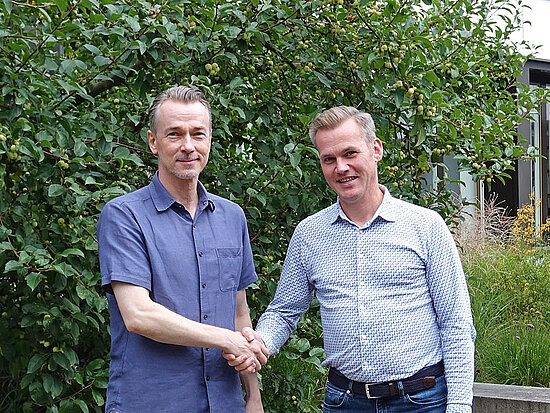
With a sixth joint professorship appointment, the Leibniz Institute of Ecological Urban and Regional Development (IOER) and the TUD Dresden University of Technology are strengthening their collaboration. Martin Behnisch, senior researcher at the IOER, has been appointed to the newly created Chair for Spatial Information and Modelling at the Faculty of Environmental Sciences. He is also the new head of the Research Area of the same name at the IOER
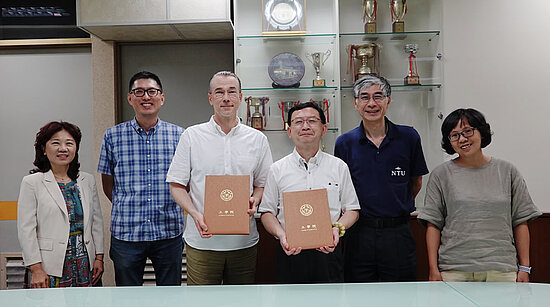
The Leibniz Institute of Ecological Urban and Regional Development (IOER) and the National Taiwan University (NTU) intend to work more closely on questions of sustainable urban and regional development in the future. Through the exchange of scientists at all career levels and joint research projects, new concepts and approaches for transformative change shall be developed. This forms the subject of a cooperation agreement that both institutions signed in July 2023.
In December 2022 an international coalition for advancing research assessment was formed (CoARA). Together with partners, the IOER is now leading one of the first CoARA Working Groups confirmed at the beginning of August. The Working Group will deal with the assessment of transdisciplinarity regarding its importance for solving pressing societal problems.
A sustainable mobility culture and infrastructure will be the topic of a panel discussion entitled "Verkehrswende Dresden – Verkehrsflächen neu denken". The event will take place on 5 September at COSMO Science Forum. It kicks off the autumn series of the IOER Forum.
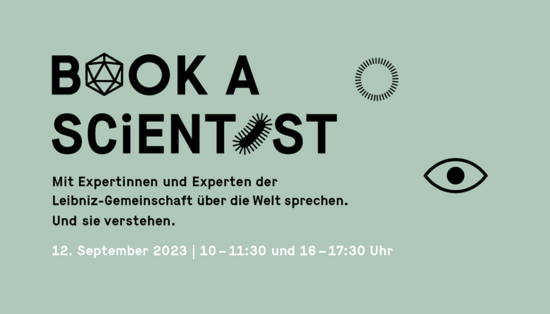
On September 12, curious minds are invited to a new edition of "Book a Scientist". In this format, initiated by the Leibniz Association, Leibniz researchers answer questions on topics that touch everyday life. This time, five scientists from the IOER are taking part.
The autumn series 2023 of the IÖR-Forum is dedicated to the change of land use. To kick things off, representatives from science, practice and civil society will discuss mobility in Dresden. This will be followed by lectures and discussions by scientists and practitioners on individual aspects of the topic until the end of the year.
At the end of the HeatResilientCity II project, which was led by the Leibniz Institute of Ecological Urban and Regional Development (IOER), the project partners have compiled important findings from the total project duration of more than five years and summarised them in two explanatory videos. In addition, a heat manual provides information on the health consequences of heat in the city and gives recommendations for action.
The Leibniz Institute of Ecological Urban and Regional Development is jointly funded by the federal government and the federal states.
This measure is co-financed by tax funds on the basis of the budget approved by the Saxon State Parliament.








![[Translate to English:] Leibniz Gemeinschaft](/fileadmin/user_upload/ioer_de/img/logo-leibniz-gemeinschaft.svg)
![[Translate to English:] Dresden concept](/fileadmin/_processed_/2/1/csm_logo-dresden-concept_430c661ad7.png)